The Fascinating World of Black Hole
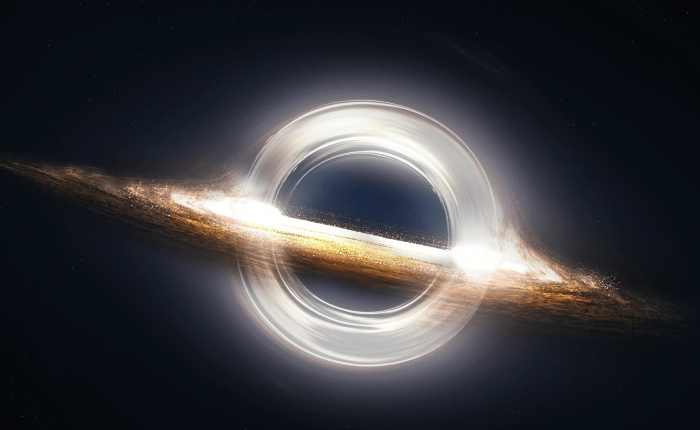
The Black hole is one of the most captivating and mysterious phenomena in the universe. As a writer with a deep interest in space science, I find myself continually drawn to the complexities surrounding these cosmic enigmas. In this blog, we’ll dive deep into the world of black holes, uncovering what they are, how they form, the different types, and their impact on the cosmos. By the end, I hope you’ll share my enthusiasm for this enthralling topic.
Table of Contents
ToggleWhat is a Black Hole?
When we think of a black hole, the first image that often comes to mind is a dark void in space that sucks in everything around it. But they are much more than that—they are regions in space where the gravitational pull is so strong that nothing, not even light, can escape. This means they are “invisible,” and we can only detect their presence through indirect observations.
The foundation of black hole theory stems from Albert Einstein’s Theory of General Relativity. According to Einstein, massive objects warp the fabric of space and time, creating gravitational wells. A black hole represents the most extreme form of this gravitational well, where space is bent so much that it essentially forms a trap from which even photons of light cannot escape.
They are remnants of massive stars that have collapsed under their own gravity. This collapse creates a singularity—a point in space where the density is infinite, and the known laws of physics break down.
How Do Black Holes Form?
One of the questions I always encounter when discussing black holes is: How do they form? The answer is as fascinating as the phenomenon itself.
Stellar Collapse: The Birth
Most black holes originate from dying stars that are several times more massive than our Sun. When a star runs out of nuclear fuel, it no longer has the pressure required to counteract its own gravity. As a result, the core of the star collapses inward, compressing into a very small, dense point known as a singularity. The outer layers of the star may explode in a spectacular event called a supernova.
If the remaining core is above a certain mass threshold, gravity will continue to compress it until a black hole is formed. This process results in what we call a stellar-mass black hole, typically with a mass ranging from a few solar masses to about 100 solar masses.
Primordial Black Holes: From the Beginning of Time
Interestingly, some theorists believe that certain these may have formed in the early universe, not from stars but from the intense pressures present just after the Big Bang. These are called primordial black holes. They are much smaller than the black holes formed by stellar collapse but are equally intriguing due to their potential role in dark matter research.
For more on how theses form, you can explore this link: NASA Source
Types of Black Holes
Black holes come in different shapes and sizes, primarily depending on their mass. Let’s break down the major types:
Stellar Black Holes
These form from the collapse of massive stars. These black holes are relatively small in cosmic terms but are incredibly dense. Their mass can range from around three to dozens of times the mass of our Sun. The nearest stellar black hole, V616 Monocerotis, is about 3,000 light-years away from Earth.
Supermassive Black Holes
At the center of most galaxies, including our own Milky Way, lie supermassive black hole. These behemoths can have masses equivalent to millions or even billions of suns. The origin of these supermassive cosmic thing is still a subject of much debate, but it’s thought that they formed from the merging of smaller holes or from direct collapse of vast clouds of gas in the early universe.
The black hole at the center of the Milky Way, known as Sagittarius A*, weighs in at around 4.3 million solar masses.
Intermediate Black Holes
As their name suggests, these are the “in-betweeners.” Their mass ranges from hundreds to thousands of solar masses. While they are harder to find, their existence helps fill the gap between stellar-mass and supermassive black holes.
Mini Black Holes
Theoretical in nature, mini black holes would have formed during the early stages of the universe due to intense pressures. They could have masses comparable to a mountain, yet be smaller than an atom. Although none have been discovered, they remain a fascinating area of research.
For more details on different types, check out: www.space.com.
Event Horizon: The Point of No Return
Perhaps one of the most intriguing parts of a black hole is its event horizon. This is the boundary around the black hole beyond which nothing can escape—not even light. In simple terms, the event horizon marks the “point of no return.” If you cross this boundary, you are destined to fall into the black hole, pulled inexorably toward its singularity.
The size of the event horizon depends on the mass of the black hole. For instance, the event horizon of a stellar-mass black hole may be just a few kilometers in diameter, while that of a supermassive black hole could span millions of kilometers.
The event horizon also holds the key to one of the most perplexing questions in physics: What happens to information that falls into a black hole? This paradox, called the information paradox, continues to challenge physicists, with no definitive answers yet.
For more on the event horizon and related phenomena, explore: Event Horizon Explained.
Inside a Black Hole: Singularity Explained
If you were to travel past the event horizon, you would ultimately reach the singularity—a point where all the mass of the black hole is concentrated in an infinitely small space. At this point, the laws of physics as we know them cease to function. Both time and space become infinitely curved, and scientists have yet to develop a theory that accurately describes what happens inside a singularity.
The existence of singularities suggests that the universe has boundaries where our understanding of physics breaks down. This is why black holes are such a fertile ground for theories that aim to unite general relativity and quantum mechanics, the two pillars of modern physics.
6. Hawking Radiation: Can These Objects Evaporate?
One of the most revolutionary discoveries in singularity physics came from Stephen Hawking in 1974, when he proposed the existence of Hawking radiation. According to this theory, these cosmic voids aren’t entirely black. Instead, they emit a tiny amount of radiation due to quantum effects near the event horizon.
Over incredibly long periods of time, this radiation can cause singularities to lose mass and eventually evaporate entirely. However, for a stellar-mass gravitational void, this process would take far longer than the current age of the universe. Yet, it opens up fascinating possibilities, especially for tiny singularities that might evaporate more quickly.
To delve deeper into Hawking radiation, you can visit: Hawking Radiation Overview.
7. Time Dilation: Einstein’s Theories in Action
The extreme gravitational forces around a singularity create bizarre effects that are predicted by Einstein’s theory of general relativity. One of the most fascinating consequences is time dilation. Essentially, the closer you get to a singularity, the slower time moves for you relative to an observer far away.
Imagine you’re watching someone falling into one of these gravitational voids. From your perspective, as they approach the event horizon, their clock would seem to tick slower and slower, eventually appearing to freeze in time. This is because the singularity’s gravity warps the fabric of spacetime itself, a concept that’s hard to wrap your mind around but has been confirmed through experiments with much weaker gravitational fields here on Earth.
Movies like Interstellar vividly portray this phenomenon, making it accessible to the general audience.
8. Mergers: Cosmic Collisions
In recent years, cosmic voids have been in the spotlight due to the detection of gravitational waves—ripples in spacetime caused by the acceleration of massive objects. One of the most significant sources of gravitational waves is the merger of two singularities.
When these gravitational entities collide, they release a staggering amount of energy, detectable billions of light-years away. These events have been captured by detectors like LIGO (Laser Interferometer Gravitational-Wave Observatory), providing us with a new way to “see” the universe through the vibrations of spacetime itself.
These mergers offer insight into the population of singularities in the universe and help scientists test predictions of general relativity under extreme conditions.
For more on cosmic void mergers and gravitational waves, visit: LIGO and Gravitational Waves.
Celestial Phenomena in Popular Culture
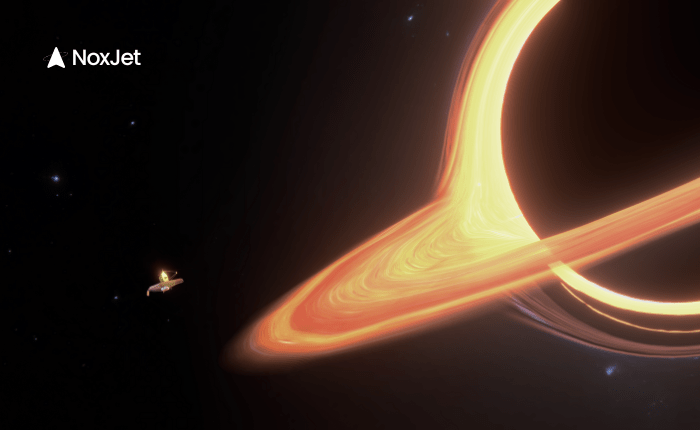
Cosmic voids have captivated not only scientists but also filmmakers, writers, and artists. From science fiction classics like Star Trek to more recent blockbusters like Interstellar, these entities often serve as portals to unknown realms or symbols of ultimate destruction.
In Interstellar, director Christopher Nolan worked with theoretical physicist Kip Thorne to depict these entities as accurately as possible, introducing millions of viewers to the concept of time dilation and event horizons. The singularity “Gargantua” in the movie is a beautifully visualized example of a rotating (Kerr) black hole.
The Never-Ending Curiosity
Cosmic voids are more than just astronomical entities; they challenge our understanding of physics, astronomy, inspire awe, and invite endless speculation. As we continue to study these mysterious objects, we inch closer to answering some of the most profound questions about the universe itself.
For more exciting reads on cosmic phenomena, you can visit these additional resources:
Happy stargazing!
